
Buyers Gaining Leverage: How To Price And Present In A Market Where Choice Has Returned
Brisbane's Inner West is still one of the strongest performing pockets of the city. Dwelling values across Brisbane are up 14.8 per cent over the past year, and areas like Paddington, Red Hill, Bardon, Toowong and Auchenflower continue to hold their position well relative to the broader market. That underlying strength hasn't gone anywhere.
What has changed is the pace and the balance of power. For the better part of two years, listings were tight and buyers moved fast, often on the seller's terms. That's shifted. Brisbane listings have swung from sitting well below the five year average at the start of 2026 to running above it by winter, and the city's auction clearance rate sat at 51.9 per cent for the week ending 16 August, below the long run balanced range of 65 to 70 per cent. Homes are taking around 28 days to sell on average, up from 19 days a year ago. Buyers now have more to compare, and they're taking the time to do it.
None of this means values are falling away or that it's a bad time to sell. It means the market has returned to something more normal after an unusually hot run, and normal markets reward vendors who prepare properly rather than those relying on momentum to carry an average listing over the line. For a Paddington cottage, a Red Hill renovator or a family home in Bardon, Toowong or Auchenflower, that's a shift worth understanding before you decide when and how to sell.
Pricing: precision beats optimism
In a scarce market, an ambitious price often finds its buyer eventually. In a market with choice, an ambitious price mostly finds silence, and silence costs you. Every week a property sits without an offer, buyers researching online read that silence as a signal, and it erodes negotiating position rather than building it. The properties moving well right now are priced against genuine comparable evidence, not against what the vendor hopes the market will do next.
This is where local, granular knowledge earns its keep. A four bedroom Queenslander on a 405sqm block in Paddington behaves differently to the same footprint in Bardon, and a renovated post war home in Red Hill behaves differently again. Broad suburb medians tell you almost nothing useful at this end of the market. What matters is the last three to five genuinely comparable sales, adjusted for condition, aspect, street and buyer type.
Presentation: give buyers a reason to act, not just look
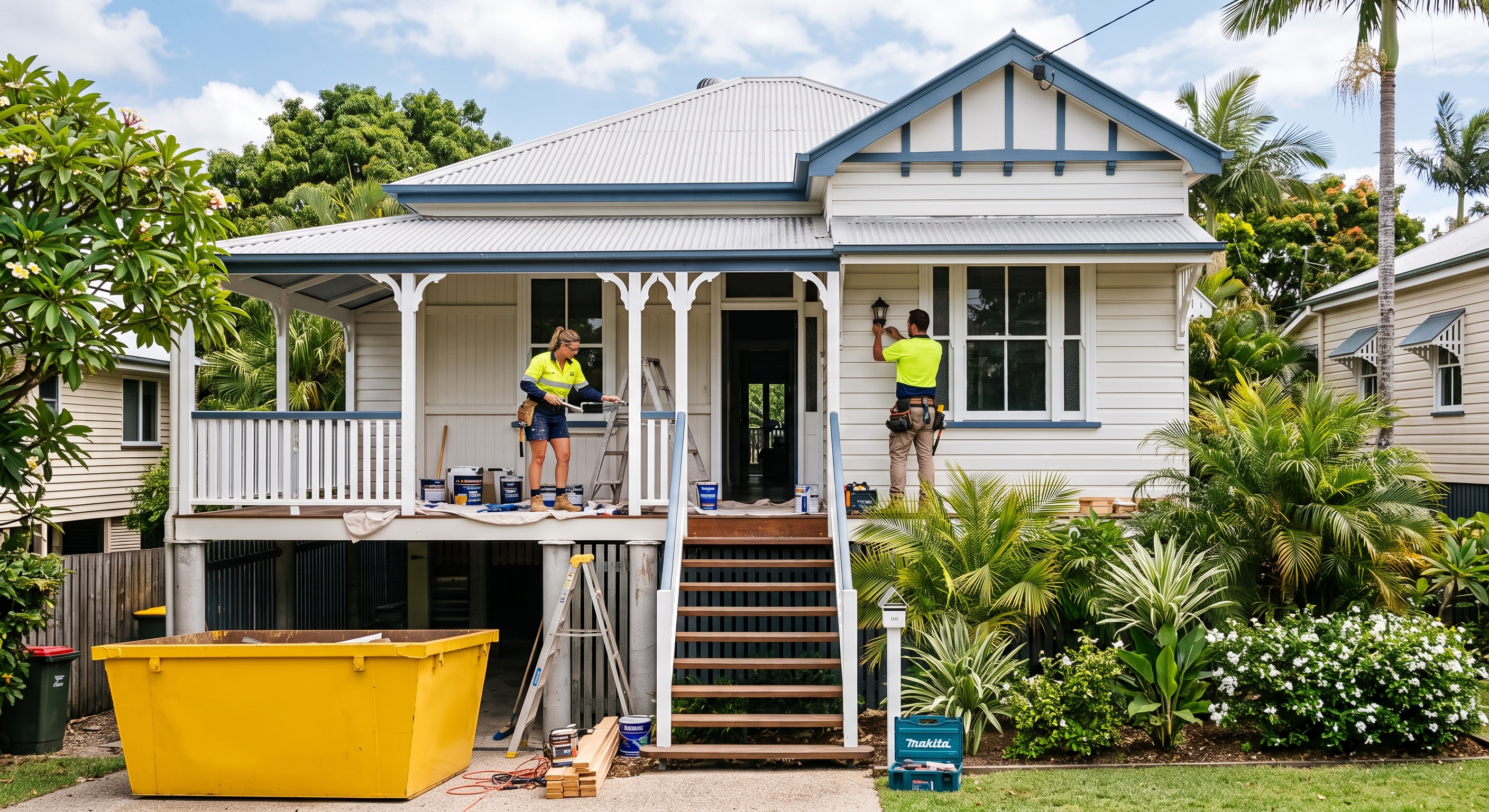
With more stock to compare, buyers are slower and more critical, but they're still buying, and they're still paying strong prices for homes that earn it. Photography, styling and the story a home tells in its first ten seconds online carry more weight than they did eighteen months ago, because that's when a buyer decides whether to inspect at all. Homes presented well from day one are still selling inside a normal timeframe. Homes that launch soft and get "refreshed" three weeks in rarely recover the same level of buyer interest, because the buyer pool that would have been most excited has already moved on to the next listing.
The other shift is buyer behaviour at inspection. They're asking more questions, taking longer, and often inspecting two or three times before committing. That's not a red flag, it's what a functioning, balanced market looks like, and it's a healthier foundation for a good outcome than the frantic pace of the past two years.
What this means for you
The Inner West remains a genuinely strong place to sell. The difference this spring is that strong results now come from preparation rather than momentum. Getting the price and presentation right from the first day on market isn't just the safer path, it's the faster one, and it's how you make the most of a market that's still fundamentally in your favour.
An appraisal now gives you a clear, current read on where your property sits against what's actually selling in Paddington, Red Hill, Bardon, Toowong and Auchenflower today. Call us on 0478 99 88 11 and let us talk you through next steps.