
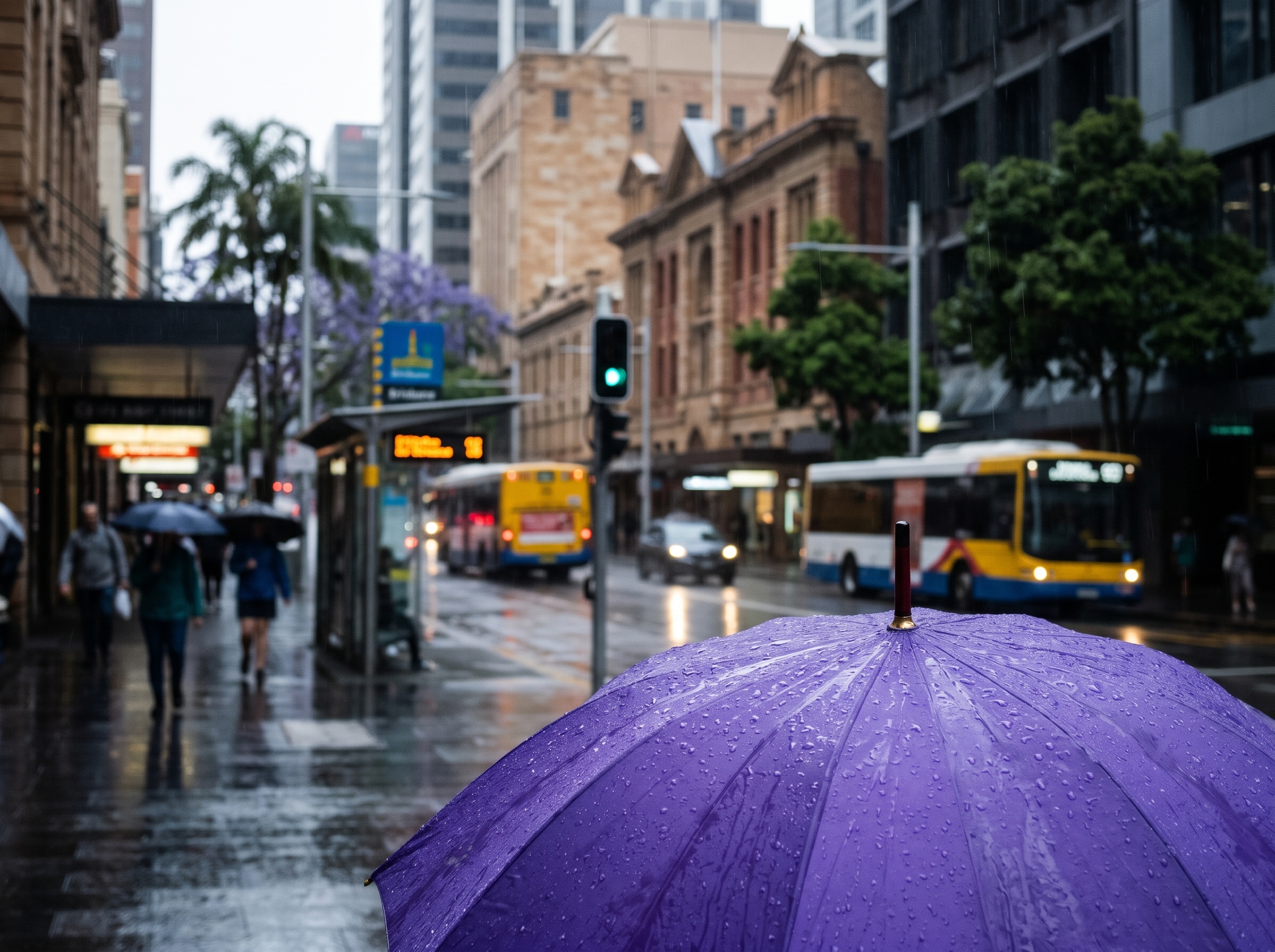
Storm Season Prep for Inner West Homes: What A Fortnight of Rain Is Telling You
On Monday evening, a 20 minute downpour was heavy enough to send my bin sailing all the way down our street in Paddington, and if the last fortnight has felt relentless where you are too, you're certainly not imagining it. Brisbane has now had roughly double its usual October rainfall (about 170mm against a monthly average of 87mm), the afternoon storms have been arriving earlier and clearing faster than we're used to, and the meteorologists remind us the heaviest falls normally come in February and March, so think of this fortnight as the warm-up to what is likely to be a hot, stormy summer.
The good news is that a wet fortnight is the best free inspection your home will ever get, so here is why the Inner West behaves differently in a storm, a checklist for this weekend, five questions for your insurer, and how to read Council's flood map.
Why the Inner West is different
Brisbane is famously built on a floodplain, but in the Inner West we also live on hills, close to the river and alongside creeks, and each shapes how water behaves around our homes. A steep street sends water downhill remarkably quickly, which is why a short, intense burst of rain can cause flash flooding nowhere near the river, as it did on 22 October when roads like Bowman Parade in Bardon were among 94 flood-related closures across greater Brisbane. Enoggera Creek winds through The Gap, Ashgrove, Alderley, Newmarket, Red Hill, Kelvin Grove and Wilston before it becomes Breakfast Creek, and it has flooded before, including in 1974 and 2011, while Milton and Auchenflower went under in January 2011 and plenty of locals still remember the canoes, dinghies and kayaks in Rosalie Village.
Then there’s the house itself, because our timber Queenslanders and character cottages breathe beautifully through a Brisbane summer, but old gutters, tired roof sheeting and blocked drains are usually the first things a storm finds. New builds and contemporary homes come with challenges of their own, because many are now built close to the boundary, and unless the overland flow from neighbouring land has been properly considered at the design stage, the way a new build sits on its block can change where the water travels, sometimes towards the neighbours and sometimes towards the house itself.
It helps to separate three types of flooding that often get lumped together:
- Flash flooding is a short, sharp burst of rain overwhelming the drains and running downhill, often well away from any creek.
- Creek flooding is a waterway breaking its banks after heavy rain.
- River flooding is the Brisbane River rising after a long wet period or dam releases.
In an ordinary storm, the first two are the ones most Inner West homes need to plan for, although homes close to the river, including parts of Milton, Auchenflower, Toowong and St Lucia, should check their river risk as well. There has also been a lot of mitigation work in recent years and plenty of notice when dams are releasing, which gives owners a real head start.
The owner's checklist
Here's what I'd work through this weekend while it's dry:
- Roof and ceilings: leaking roofs were the most common SES callout statewide on 22 October, so look for water stains, lifted or rusted sheeting, loose ridge capping and worn flashing around chimneys and skylights.
- Gutters and downpipes: clear the debris, check the joins are sealed, and make sure downpipes empty well away from the house.
- Drainage and under the house: the ground should slope away from the walls, stormwater drains should be clear, and the sub-floor should be free of damp, pooling water and termites, because wet weather and pests tend to arrive together.
- Trees and low areas: ask an arborist to check limbs over the roof, and lift valuables and cords off garage and lower-level floors.
- Emergency basics: keep a torch, power banks and your documents in a waterproof bag, and check Council's website for your nearest sandbag depot before you need one.
Five questions for your insurer
I'm not an insurance adviser and every policy is different, but the Insurance Council of Australia says 78% of declared insurance catastrophes over the past decade happened between October and April, so now is the time to ask:
- How does my policy define storm, flood and stormwater?
- Is my sum insured enough to rebuild at today's costs? This is an important one to consider as building costs have increased signifcantly in the past few years, and tradesman are becoming more unavailable the closer we get to Brisbane's 2032 Olympic Games.
- What are my excess and exclusions?
- What records should I keep to make a claim simple?
- Would flood-resilient works change my premium?
If you're buying or selling
If you're buying, visiting after rain lets you see the street as well as the house, so notice where the water runs and whether a ceiling stain has been freshly painted over, then ask your building and pest inspector to focus on the roof, drainage and moisture under the house.
If you're selling, a wet fortnight shows you exactly what a buyer's inspector will find, so fix leaks, gutters and drainage before you list and keep the receipts. We also recommend pre-sale building and pest inspections so any surprises are dealt with before you come to market, and since 1 August 2025 Queensland sellers have had to provide prescribed information, including planning and environmental matters, before a contract is signed, so ask your solicitor what applies to you.
A word on the flood map
Brisbane City Council updated its Flood Awareness Map in 2025, affecting 17,246 properties, with more than 10,000 added to the map. The map covers creek and waterway flooding rather than river flooding or overland flow, and newer modelling allows for far more rainfall than earlier studies, so we should expect it to keep evolving.
Being on the map doesn't mean a property floods, and being off it doesn't mean it never will. As real estate agents, flooding history and overland water flow are among the first things we discuss with owners, and we often find that mapped homes have rarely had water on the block. But a map and a history are two different things and both matter, particularly with so many interstate or out of town buyers relying on us to explain how the mapping works and what "being blue" on the map means to them in real terms. The practical step is to look up your address on Council's Flood Awareness Map or request a FloodWise Property Report, and if you believe the modelling is wrong, there's a formal technical review process that needs surveyed evidence. The Brisbane City Council also provide general advice for flood resilient design and building, which is a great resource for anyone looking at a new build or renovating their existing Brisbane home.
What to do this week
Walk your roof line and gutters while it's dry, look up your address on Council's flood map, and put the five questions to your insurer. If you're thinking of listing in the next 6 to 12 months, book a pre-sale walkthrough with us and we'll point out what a buyer's inspector would find and recommend local tradespeople we trust.
The weather will settle eventually, but the next storm is only a matter of time, and a little preparation now means you won't be on the roof in the dark. If you'd like a chat about your home, call Felicity on 0478 998 811 and we will find a time that fits. Appraisal callbacks are returned within 24 hours.
General information only, not insurance, legal or engineering advice. Weather figures are from the Bureau of Meteorology and ABC News. Check your property's flood information with Brisbane City Council and speak to your insurer, solicitor or a licensed tradesperson. Glynis Austin Properties. $900m+ in career sales, 30+ years of collective Inner West experience, 5 stars across multiple platforms.